 08045815886


 Send Inquiry
ConXport . Slit Lamp (Ultima)
ConXport . Slit Lamp (Ultima) Specification
- Core Components
- Microscope, illumination system, mechanical base
- Temperature Range
- Ambient room temperature operation
- Power Source
- AC mains, 220-240V
- Capacity
- Slit Lamp offers a magnification range, commonly 10x, 16x, and up to 25x.
- Accuracy
- High precision optical alignment
- Model No
- Ultima
- Automation Grade
- Manual
- Voltage
- 220 V
- Frequency
- 50/60 Hz
- Feature
- Bright, steady illumination; variable slit width and height; smooth joystick movement
- Measurement Range
- Microscopic examination up to 16 mm slit length
- Equipment Materials
- High-grade aluminum alloy, coated finish
- Type
- Diagnostic Ophthalmic Equipment
- Usage
- Eye examination, detailed retinal and anterior segment evaluation
- Display Type
- Optical view through binocular microscope
- Dimension (L*W*H)
- Approx. 350 x 420 x 700 mm
- Weight
- Approx. 9-12 kg
- Safety Compliance
- CE marked, ISO certified
- Color
- White and Grey Contrasts
- Base Movement
- Smooth XY movement with precision joystick for positioning
- Application
- Hospital, Clinic, Ophthalmology Practice
- Eyepiece
- 12.5x wide field
- Magnification System
- Three-step rotating drum for variable magnification levels
- Working Distance
- 80 mm
- Interpupillary Distance
- Adjustable, 55-75 mm
- Illumination Bulb
- Halogen bulb, 12V/30W
- Filter Options
- Cobalt blue, red-free, heat absorbing filters
- Slit Width Adjustment
- 0 to 14 mm continuously variable
- Objective
- Adjustable aperture, up to 50 mm
- Slit Height Adjustment
- 1 to 14 mm
- Head Movement
- Vertical and horizontal adjustment
ConXport . Slit Lamp (Ultima) Trade Information
- FOB Port
- Delhi
- Payment Terms
- Letter of Credit (L/C), Telegraphic Transfer (T/T), Paypal
- Supply Ability
- 15 Per Week
- Delivery Time
- 6-7 Days
- Sample Available
- Yes
- Sample Policy
- If order is confirmed we will reimburse the sample cost
- Main Export Market(s)
- Australia, North America, South America, Eastern Europe, Western Europe, Middle East, Africa, Central America, Asia
- Main Domestic Market
- All India
About ConXport . Slit Lamp (Ultima)
Slit Lamps - 4 Models
The slit lamp is essentially a simple and generally under-used piece ofequipment. It consists of an illumination system and a binocular observationsystem, which when correctly aligned will result in a coincidental focus of theslit and microscope.
Illumination system
Basically a short focus projector projecting an image of the illuminated slit apertureon to the eye. This part of the system should be flexible to allow varioussizes and shape of slit beam. Usually a rheostat is incorporated and the lamphouse can be rotated. Neutral density, cobalt blue and red free filters areusually available, and occasionally a diffuser and polarizer
Using the slit lamp
Commence the examination using the 10x eyepieces and the lower poweredobjective i.e. 1x. Use the lowest voltage setting on the transformer. Selectthe longest slit length by means of the appropriate lever (17). Adjust the chinrest by means of control 27 so that the patients eyes are approximately levelwith the black marker on the side of the head rest. Adjust the height of theslit lamp until the slit beam is centred vertically on the patients eye. Focusthe slit beam on the eye by moving the joystick (1) either towards or away fromthe patient. Coarse positioning can be effected without using the microscopebut critical focussing should be carried out whilst viewing through themicroscope. The slit width is varied by rotating either the left hand or righthand knurled control 10. To vary the angle between illumination and microscopeuse one or other of these same controls as handles.
The slit should be set primarily in the vertical position, butany desired inclination can be achieved by means of the ball handle 15 (notchesat 45, 90, 135; stops at 0 and 180). By tripping the latch 11 and tiltingthe slit lamp column, the beam can be introduced from as much as 20 below thehorizontal. This is mainly used for carrying out gonioscopy.
For observation by sclerotic scatter or other dissociated formsof examination the centering screw 13 is loosened, so that the slit image canbe moved away from the centre of the field of observation. The image iscentered again by tightening the screw. Carry out the techniques describedbelow.
|
Specifications - Binocular Microscope |
|||
|
|
Eye Pieces |
: |
10x, 15x |
|
|
Objective |
: |
1x, 1.6x |
|
|
Total Magnification |
: |
10x, 16x and 24x |
|
Illumination Unit |
|||
|
|
Slit Image Rotation |
: |
0 to 180 |
|
|
Tilting Illumination |
: |
Up to 20 |
|
|
Filter Disc |
: |
Cobalt Filter, Green Filter, Yellow Filter Natural Density and Open Aperture |
|
|
Slit Disphragm Disc |
: |
Wedge Shaped Diaphragm Of Infinitely Variable Slit Lengths |
|
|
Halogen Lamp |
: |
12 Volt 50 Watts |
Precision Eye Examination Made Easy
The ConXport Slit Lamp (Ultima) offers ophthalmic professionals precise control for examining ocular structures. Its high-grade optics provide clear, magnified views for intricate assessments of the anterior segment and retina. Intuitive controls and a responsive joystick allow seamless positioning, enabling effortless targeting and adjustment during patient examinations.
Versatile Magnification and Illumination
With a three-step rotating drum, practitioners can select from multiple magnification levels10x, 16x, and 25xtailoring the view based on the clinical requirement. Halogen illumination delivers consistent, bright light, while a range of optical filters (cobalt blue, red-free, heat absorbing) enhances visualization of different ocular features, supporting comprehensive diagnostics.
Ergonomic and Compliant Design
Built with high-grade aluminum and a coated finish, the ConXport Ultima ensures durability and aesthetic appeal. The adjustable interpupillary distance and smooth XY base movement promote operator comfort. Certified CE and ISO standards affirm its safety, making it ideal for hospitals, clinics, and practitioners across India.
FAQs of ConXport . Slit Lamp (Ultima):
Q: How do I adjust the magnification on the ConXport Slit Lamp (Ultima)?
A: The slit lamp features a three-step rotating drum, allowing you to switch smoothly between three magnification levels, typically 10x, 16x, and 25x. Simply rotate the drum to select your desired magnification for optimal visualization during examinations.Q: What eye conditions can be evaluated using this slit lamp?
A: The ConXport Ultima Slit Lamp is designed for comprehensive anterior segment and retinal assessments. It facilitates the diagnosis and evaluation of conditions such as cataracts, corneal abrasions, conjunctivitis, and various retinal disorders.Q: When should the different filter options be used during an examination?
A: Filters enhance ocular structure visibility under specific conditions. Use the cobalt blue filter for fluorescein staining and corneal assessments, the red-free filter to improve vessel contrast, and the heat absorbing filter for prolonged observation without discomfort.Q: What is the process for adjusting the slit width and height?
A: The lamp offers continuously variable slit width (0 to 14 mm) and height (1 to 14 mm), which can be easily adjusted via dedicated controls. This allows the practitioner to customize the light beam according to the area being examined.Q: Where can the ConXport Slit Lamp (Ultima) be utilized?
A: Designed for versatility, it is ideal for use in hospitals, clinics, and ophthalmology practices, supporting a wide range of diagnostic applications in both urban and rural healthcare settings.Q: How does the ergonomic design benefit the user during prolonged use?
A: The adjustable interpupillary distance and smooth, precision XY joystick enable comfortable, fatigue-free examinations. The sturdy yet lightweight aluminum construction facilitates long-term, stable positioning without compromising on operator control.Q: What are the core components included with the ConXport Slit Lamp (Ultima)?
A: The main components include a binocular microscope, a halogen illumination system, a mechanical base with ultra-smooth movement, and essential optical filters, all integrated to deliver accurate and detailed diagnostic results.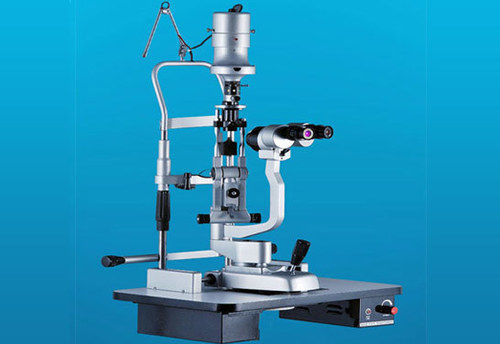
Tell us about your requirement

Price:
Quantity
Select Unit
- 50
- 100
- 200
- 250
- 500
- 1000+
Additional detail
Mobile number
Email

More Products in ENT And Ophthalmic Instruments Category
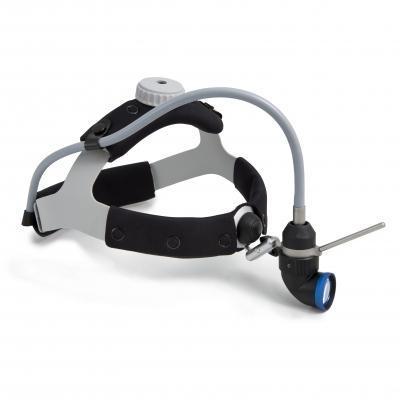
ConXport Fiber Optic Headlight
Accuracy : Precision illumination; aligned optic
Equipment Materials : Highquality plastic body with optical glass
Model No : ConXport Fiber Optic Headlight
Automation Grade : Manual operation
Feature : Intense white light; uniform illumination; adjustable focus; lightweight headband
Core Components : Fiber optic cable, lamp module, adjustable headband
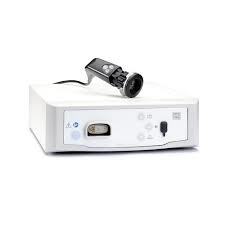
ConXport Endoscope Camera
Accuracy : High Precision Video and Image Clarity
Equipment Materials : Highgrade ABS Plastic and Stainless Steel
Model No : ConXport Endoscope Camera
Automation Grade : Manual
Feature : Portable, RealTime Video Capture, HighResolution Imaging
Core Components : Image Sensor, LED Light Source, LCD Display

ConXport . Indirect Ophthalmoscope
Accuracy : Precise stereoscopic imaging for retinal diagnosis
Equipment Materials : Highquality plastic with metal adjustments
Model No : ConXport Indirect Ophthalmoscope
Automation Grade : Manual
Feature : Adjustable headband, bright halogen illumination, stereoscopic view
Core Components : Headband, ocular assembly, illumination system, lens holder
ConXport . Retinoscope Mirror
Accuracy : High precision optics
Equipment Materials : Glass, Metal
Model No : ConXport Retinoscope Mirror
Automation Grade : Manual
Feature : Easy to clean, High durability
Core Components : Mirror, Handle

 Send Inquiry
 Send SMS
 Call Me Free
|


CONTEMPORARY EXPORT INDUSTRY
GST : 06AJMPT4011D1ZG
GST : 06AJMPT4011D1ZG

- B No. 4353, Main Road, Near Geeta Gopal Temple,Ambala Cantt - 133001, Haryana, India
- Phone :08045815886

- Mr Akhil Trehan (Proprietor)
- Mobile :08045815886
- Send Inquiry
 Send Inquiry
CONTEMPORARY EXPORT INDUSTRY
All Rights Reserved.(Terms of Use)
Developed and Managed by Infocom Network Private Limited.
Developed and Managed by Infocom Network Private Limited.

